France's 17 November strike draws sharply different turnout counts
The Interior Ministry counted 146,000 marchers nationwide while the CGT claimed more than 500,000, with official strike participation near 3 percent.
France's 17 November public-sector strike produced a large gap between official and union turnout estimates. The Interior Ministry counted 146,000 demonstrators nationwide, including 28,000 in Paris. The CGT said more than 500,000 took part across the country and 175,000 marched in the capital.
Neither estimate is a neutral headcount. Police and organisers use different methods, routes and sampling, so French protest coverage routinely presents both. Reuters described the marches as largely peaceful and reported lower participation than at earlier stages of the autumn movement.
Strike rates measure something different
Administrative strike rates offer a separate measure because they count absent employees rather than marchers. The Finance Ministry reported final participation of 2.79 percent in the state civil service, 2.52 percent in local government and 2.60 percent in the hospital service. Those rates do not include every worker who may have demonstrated outside working hours or in another sector.
The results are a meaningful update to the advance picture published by WHIF on 17 November, when only official forecasts were available. Actual police turnout finished below the government's pre-march national estimate of 220,000 to 300,000. Organisers' final claim was much higher than both figures.
Final figures replace the pre-march forecasts
Le Monde's live reporting recorded a calm Paris demonstration by late afternoon and placed the day inside a wider decline in mobilisation. AFP reported dozens of marches across France while noting the unions' continuing demands on pay, careers and the frozen civil-service salary index.
The modest official strike rates do not settle the underlying dispute. Public-sector unions are still seeking general salary measures and clearer career progression, while the government has focused on targeted help and a later purchasing-power meeting. The next test is whether talks produce a concrete pay offer or another call for action.
A smaller mobilisation leaves the pay dispute open
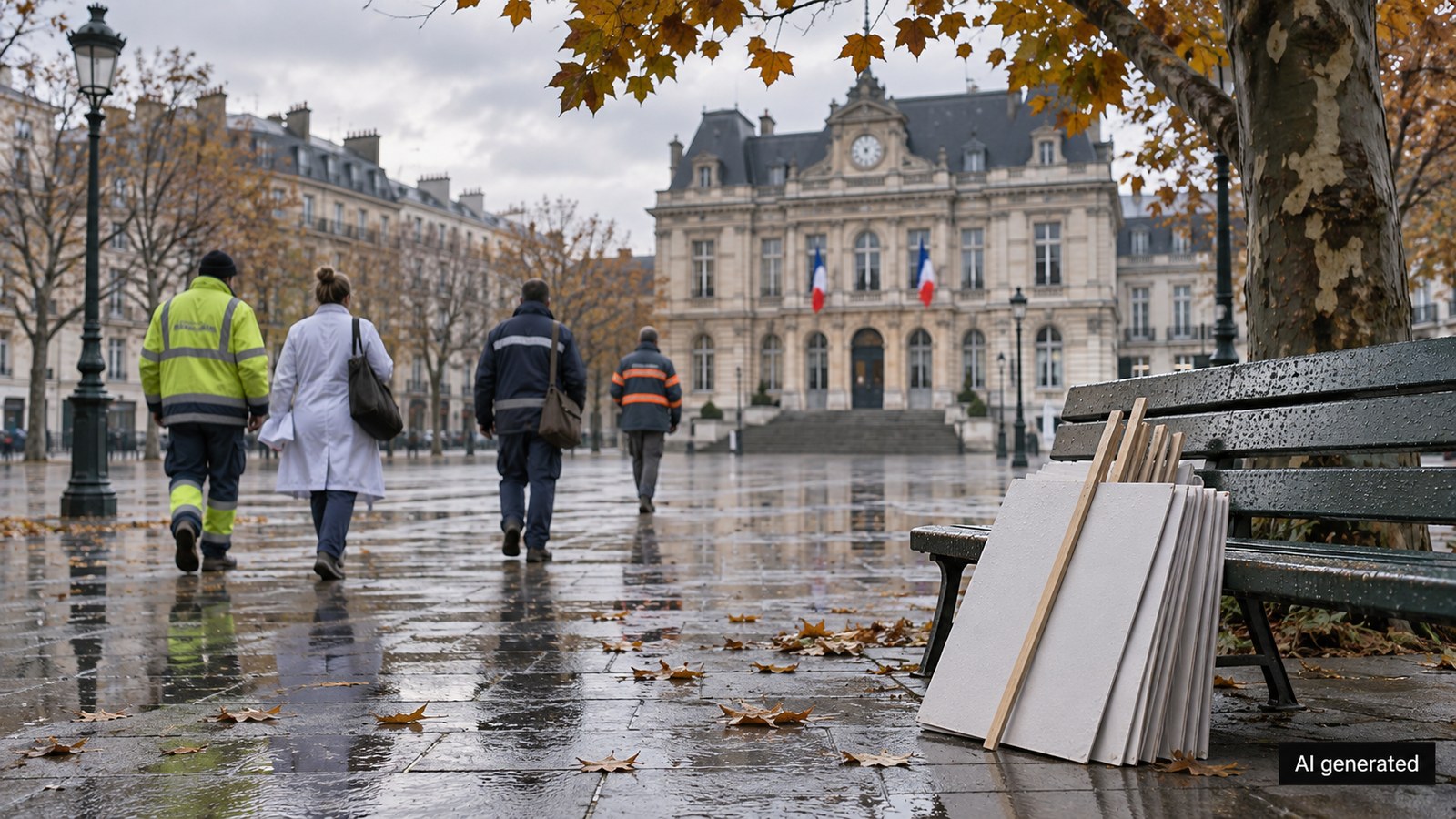
The most defensible conclusion is that the strike remained nationwide but did not reach the scale forecast by the authorities or claimed by organisers. Both turnout estimates and the official employee rates should be kept distinct. The accompanying image is an invented post-march scene, not a photograph of the 17 November demonstrations, participants or a named city.
Sources & context
Reporting and reference material used for this article. Context sources do not independently confirm every news claim.
- Reuters ↗Independent reporting, published 17 November 2026: police and union turnout estimates, Paris count and national context.
- Le Monde ↗Independent live reporting, 17 November 2026: Paris conditions, prefecture estimate and the day's changing mobilisation picture.
- AFP ↗Independent wire reporting, published 17 November 2026: nationwide marches, union demands and organisers' estimate.
- French Finance Ministry ↗Primary final administrative data, published 17 November 2026: strike participation in state, local and hospital services.
Written for WHIF from the linked material. This article does not claim on-the-ground reporting. Our editorial standards.