France's meal-voucher reform puts the supermarket limit at the centre
Parliament is considering permanent grocery use, full digitalisation and new market rules, while a possible lower shopping cap divides retailers and restaurants.
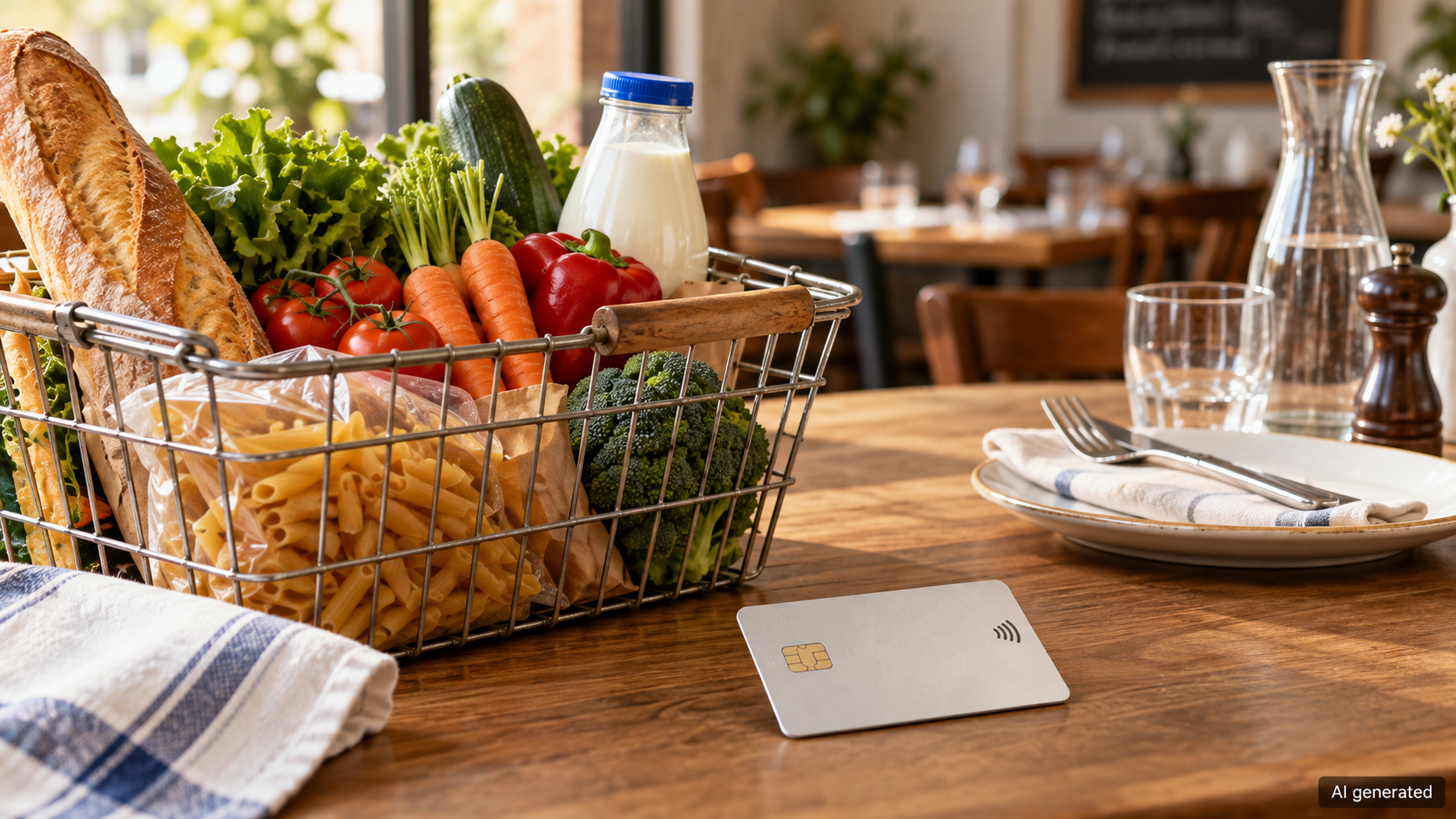
France's National Assembly is scheduled to debate a bill on 12 October that would make supermarket use of meal vouchers permanent and reorganise a market used by millions of workers. The legislation arrives before a temporary rule allowing all food purchases expires on 31 December 2026.
Under the current arrangement, employees can spend up to €25 a day in restaurants or on eligible food in shops. The broader grocery rule was introduced as a purchasing-power measure and covers products that are not ready to eat, including pasta, rice, flour and cooking oil.
Permanent grocery use comes with a broader market overhaul
The committee text would preserve that wider food use, move the system fully away from paper and improve transparency around fees charged by voucher issuers. The government's accelerated procedure means the proposal can move quickly, but the Assembly vote is only one stage and the final rules may still change.
The most contested question is whether supermarkets should face a lower daily ceiling than restaurants. Amendments have discussed limits of €10 or €15 for grocery purchases while retaining €25 for meals out. Restaurant groups argue that an employer-supported lunch benefit should primarily sustain prepared meals. Retailers and consumer advocates warn that a lower cap would reduce flexibility for workers managing tight household budgets.
A double ceiling divides purchasing power from restaurant support
This is also a competition issue. The system connects employers, employees, issuers, restaurants and supermarkets, each paying or receiving different fees. The bill seeks clearer disclosure and easier movement between providers. Earlier competition analysis found that four issuers controlled almost the entire market, while also warning that a simple statutory fee cap could create new distortions.
Nothing changes for shoppers merely because the debate begins. The existing €25 limit and the temporary grocery eligibility remain in force until legislation is enacted and an effective date is set. Claims that supermarket purchases have already been cut to €10 therefore confuse proposed amendments with current law.
The useful test for the final measure is practical: whether workers can buy food without arbitrary barriers, whether restaurants receive meaningful support and whether fees become more transparent. Parliament can rebalance the system, but a headline ceiling alone will not resolve the conflict between purchasing power, lunch policy and competition.
Sources & context
Reporting and reference material used for this article. Context sources do not independently confirm every news claim.
- French National Assembly ↗Primary legislative source, updated 12 October: bill history, accelerated procedure, committee text and public-session timetable.
- Dernières Nouvelles d'Alsace ↗Independent reporting, 7 October: arguments around the proposed supermarket ceiling and affected workers.
- French Economy Ministry ↗Primary practical source, updated September: current €25 limit, employer contribution and the pending reform.
- Légifrance ↗Primary legal context: temporary authority for all food purchases through 31 December 2026.
Written for WHIF from the linked material. This article does not claim on-the-ground reporting. Our editorial standards.