France's education protest shows limited turnout and serious violence
Official participation was low on 10 November, but attacks on staff and an elected official sharpened concern as organisers planned further action.
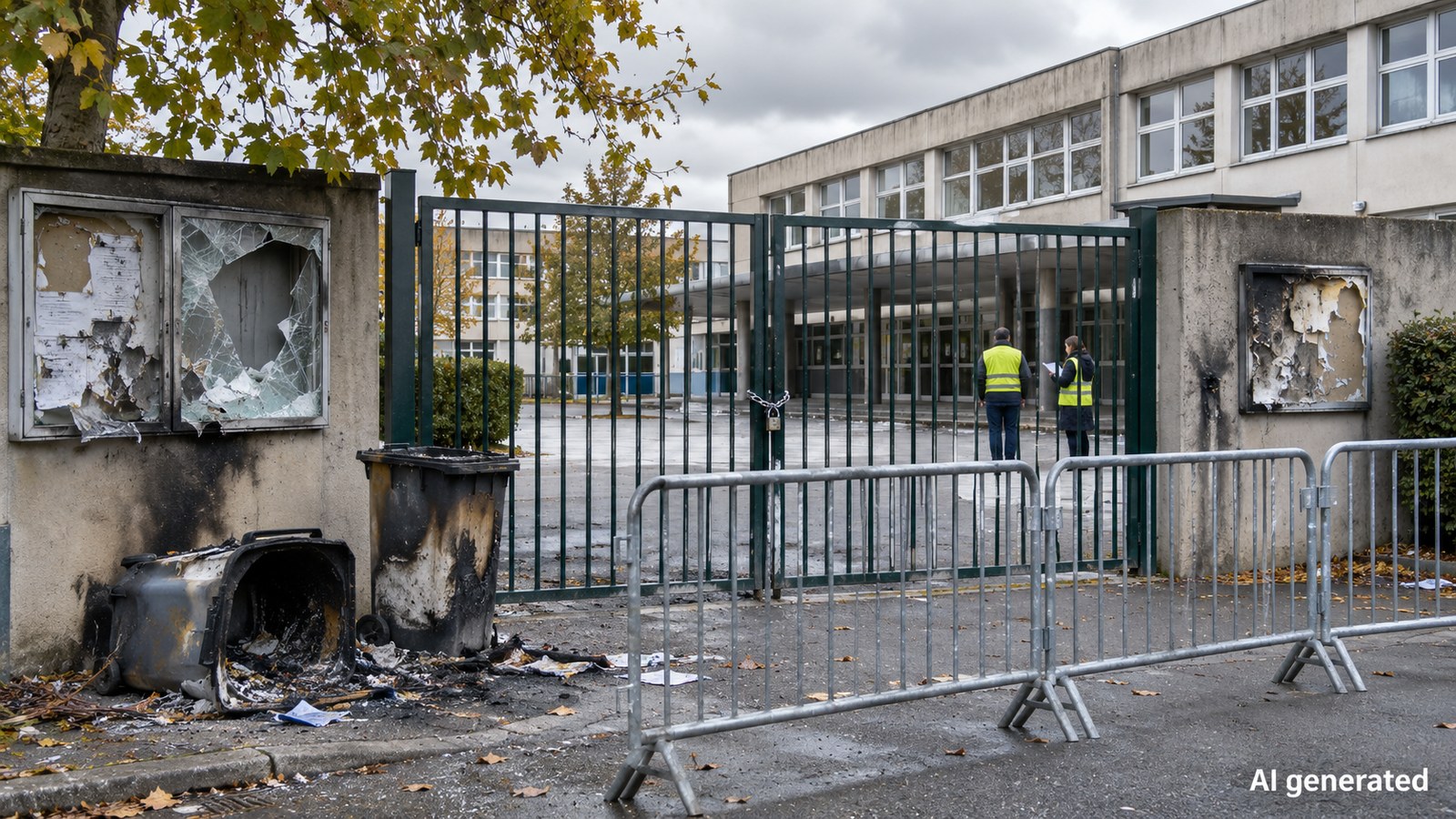
France's 10 November education mobilisation combined low nationwide participation with several serious local incidents. The education ministry put overall participation at 1.55 percent and teacher participation at 1.60 percent. Those figures do not diminish the reported violence, but they show that disruption and participation were uneven rather than universal.
An elected official in Chelles, Angela Pascoa Dos Santos, was struck in the torso by a sealed bottle filled with petrol while visiting a school. She filed a complaint, and prosecutors opened an investigation for attempted voluntary homicide. A school principal in Bègles was also hit by a projectile. These are criminal investigations, not established findings about who was responsible.
Serious incidents amid uneven disruption
AFP reported that 49 of roughly 3,700 high schools were blocked in the morning and that about a quarter of higher-education establishments experienced disruption. In Paris, police counted 5,900 marchers while organisers said 10,000. The march was largely calm, illustrating the gap between national mobilisation and isolated but grave episodes.
A fire damaged part of a school in Aix-en-Provence, although the prosecutor said no link to the protest had been established at that stage. That distinction matters. A disturbing event occurring on the same day should not be attributed to demonstrators without evidence from the investigation.
A fire without an established protest link
Government communication also required correction. An initial public figure of nearly 300 injured education personnel was later corrected by the government spokesperson's office to 240, according to AFP reporting carried by Europe 1. The lower figure is still substantial, but the correction should replace the earlier number rather than sit beside it as a separate estimate.
The youth union behind the mobilisation condemned violence and said further action would follow, including calls for Saturday and 17 November. Organisers are protesting education policy and conditions, while authorities are focusing increasingly on safety around schools. Future turnout and incident data will show whether the movement broadens or remains concentrated.
Further action is planned
The evidence supports two conclusions at once: most education workers did not join the 10 November action, and some people faced unacceptable danger. Treating the day as either a nationwide shutdown or an ordinary low-turnout strike would miss that contrast. Investigations, corrected official data and the next mobilisation will provide the more reliable measure of what follows.
Sources & context
Reporting and reference material used for this article. Context sources do not independently confirm every news claim.
- French Ministry of Education ↗Primary official participation data, published 10 November 2026: national and teacher participation rates.
- Reuters ↗Independent reporting, published 10 November 2026: local incidents, political reactions and plans for continued mobilisation.
- AFP via Boursorama ↗Independent wire reporting: blocked schools, higher-education disruption, Paris turnout estimates and the status of local investigations.
- AFP via Europe 1 ↗Independent wire update: correction of the government figure for injured education personnel from nearly 300 to 240.
Written for WHIF from the linked material. This article does not claim on-the-ground reporting. Our editorial standards.