France opens a third call for critical-metals projects
The France 2030 programme is seeking industrial projects in extraction, processing and recycling, but public support will have to reconcile supply security with environmental limits.
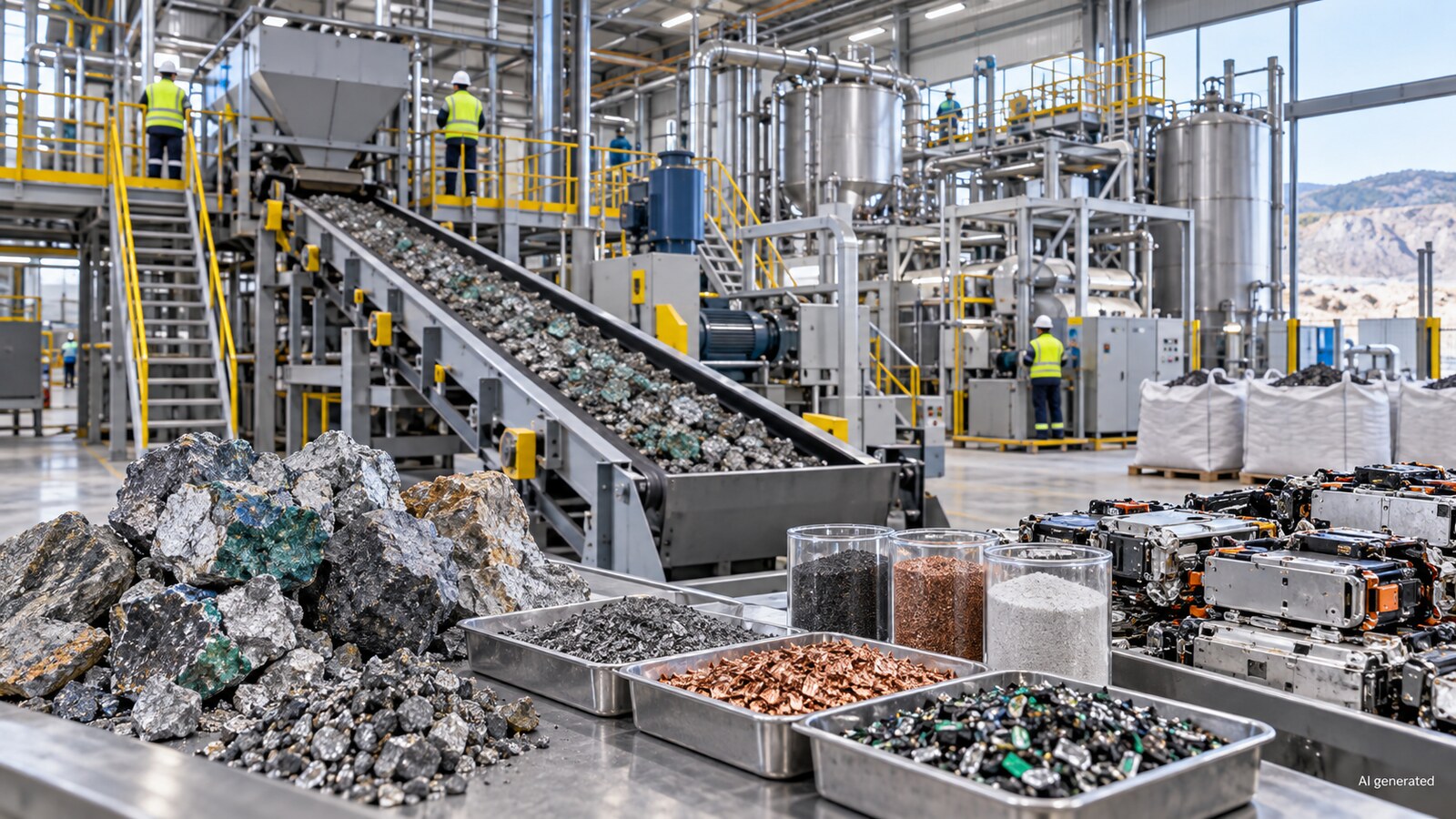
France has launched the third round of its France 2030 call for critical-metals projects. The government wants investment in extraction, processing and recycling that can be industrialised quickly in France. The stated goals are to secure strategic supply chains, reduce dependence on non-European sources and lower the environmental footprint of production.
Critical metals sit inside technologies that France wants to manufacture at scale, including batteries, renewable-energy equipment, electronics, aerospace systems and some dual-use products. Supply is often concentrated in a small number of countries and processing stages, which can turn a factory plan into a geopolitical vulnerability.
A legal route from pilot to factory
The legal basis is now explicit. An order published in the Journal officiel approved the specifications for the Métaux 3 call under the France 2030 action covering real-world demonstrations, early industrial deployment and first commercial facilities. That places the programme beyond a general policy announcement, although awards and individual subsidies have not yet been made.
Public funding already has a wider financial architecture. The Economy Ministry says the state provided 500 million euros to a critical-metals fund with a fundraising target of 1.5 to 2 billion euros. The new project call is a separate selection instrument, so those fund figures should not be read as the budget available to every applicant.
Recycling helps but does not remove demand
Recycling is central because it can recover material from batteries and equipment already in circulation, reduce exposure to imported primary ore and limit some extraction impacts. It cannot immediately replace mining. Collection rates, product design, processing losses and the rapid growth of demand determine how much secondary supply can contribute.
The environmental test is equally important. A WWF analysis estimated that French demand in 2030 could represent roughly 2 to 3.3 percent of projected world primary supply in a higher-consumption scenario. That context supports supply planning, but also makes efficiency, material substitution and demand reduction part of a credible strategy.
Awards will show what the policy means
The announcement opens a competition rather than proving new capacity. The next useful evidence will be the selected projects, their public support, expected output, environmental permits and delivery schedules. Until then, the significance lies in the criteria: France is trying to connect industrial sovereignty with recycling and lower-impact production, and will need to show how trade-offs are enforced.
Sources & context
Reporting and reference material used for this article. Context sources do not independently confirm every news claim.
- French Government ↗Primary announcement, published 30 October 2026: scope, selection objectives and industrial rationale.
- Légifrance ↗Primary legal material, published 24 October 2026: approval of the Métaux 3 specifications.
- French Economy Ministry ↗Official context: critical-metals fund structure and wider supply-security policy.
- WWF France ↗Independent context report: scenarios for France's 2030 share of global primary-metals supply.
Written for WHIF from the linked material. This article does not claim on-the-ground reporting. Our editorial standards.