France keeps a unique Jurassic dinosaur in public hands
The state has acquired the only known Dubreuillosaurus specimen before auction, securing it for research and eventual public display in Paris.
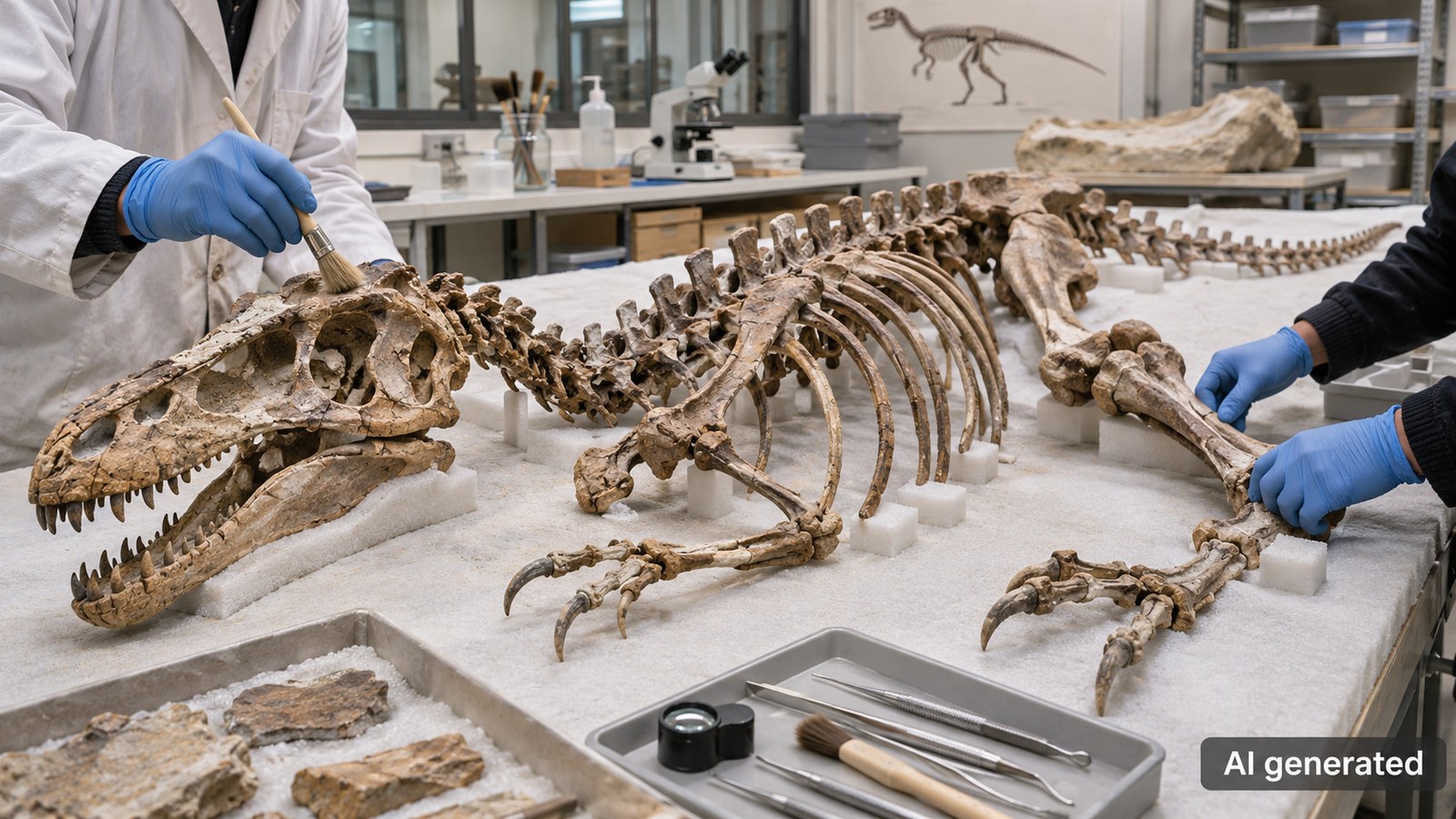
The French state has acquired the only known specimen of Dubreuillosaurus valesdunensis before it could be sold at a Paris auction. The roughly 167-million-year-old carnivorous dinosaur will join the Muséum national d'Histoire naturelle, keeping a scientifically unique fossil in a public collection accessible to researchers and, after preparation, visitors.
The skeleton was discovered in 1994 near Caen in Normandy and later studied through excavations supported by the museum. Researchers identified it as a distinct species. The higher education and research ministry said the acquisition followed negotiations with the owner; the purchase price was not disclosed.
An auction avoided through negotiation
A Drouot sale had been planned for 18 November with an estimate of €250,000 to €350,000, according to The Art Newspaper's French edition. The state purchase removes the specimen from that auction. The estimate is not the final transaction price and should not be presented as what the museum paid.
The acquisition matters because a holotype, the reference specimen used to define a species, cannot be replaced by another example when none is known. Public custody gives scientists continuing access and allows future techniques to revisit old questions. It also reduces the risk that access would depend on a private owner's decisions.
Why a unique reference fossil matters
The museum plans new scans, study and a biomechanical remount before display. Its palaeontology gallery is scheduled to reopen in summer 2027, and the ministry said loans to Normandy could also be considered. The fossil is therefore secured for the collection but is not yet available as a completed public exhibit.
Euronews reported that the case had drawn concern from scientists before the state intervened. That concern reflected the specimen's research value, not a general claim that all privately held fossils must be nationalised. Provenance, legality and scientific importance vary from object to object.
Secured now, prepared for later display
For visitors, the immediate news is preservation rather than opening day. The dinosaur now has a permanent public institutional home, while conservation and reconstruction work still lie ahead. Dates for display or regional loans should be treated as plans until the museum publishes a detailed programme.
Sources & context
Reporting and reference material used for this article. Context sources do not independently confirm every news claim.
- French Ministry of Higher Education and Research ↗Primary acquisition announcement, published 9 November 2026: provenance, scientific status, negotiated purchase and museum plans.
- The Art Newspaper France ↗Independent specialist reporting: planned auction date, estimate and cultural-property context.
- Euronews ↗Independent reporting, published 9 November 2026: corroboration of the acquisition, age and scientific concern before the sale.
- Muséum national d'Histoire naturelle ↗Primary earlier context from the museum: scientific significance and research history before the acquisition.
Written for WHIF from the linked material. This article does not claim on-the-ground reporting. Our editorial standards.