France's Food Banks collection confronts a structural emergency
The 42nd national drive ends on 8 November after moving three weeks earlier, as the network reports heavier demand and rising transport costs.
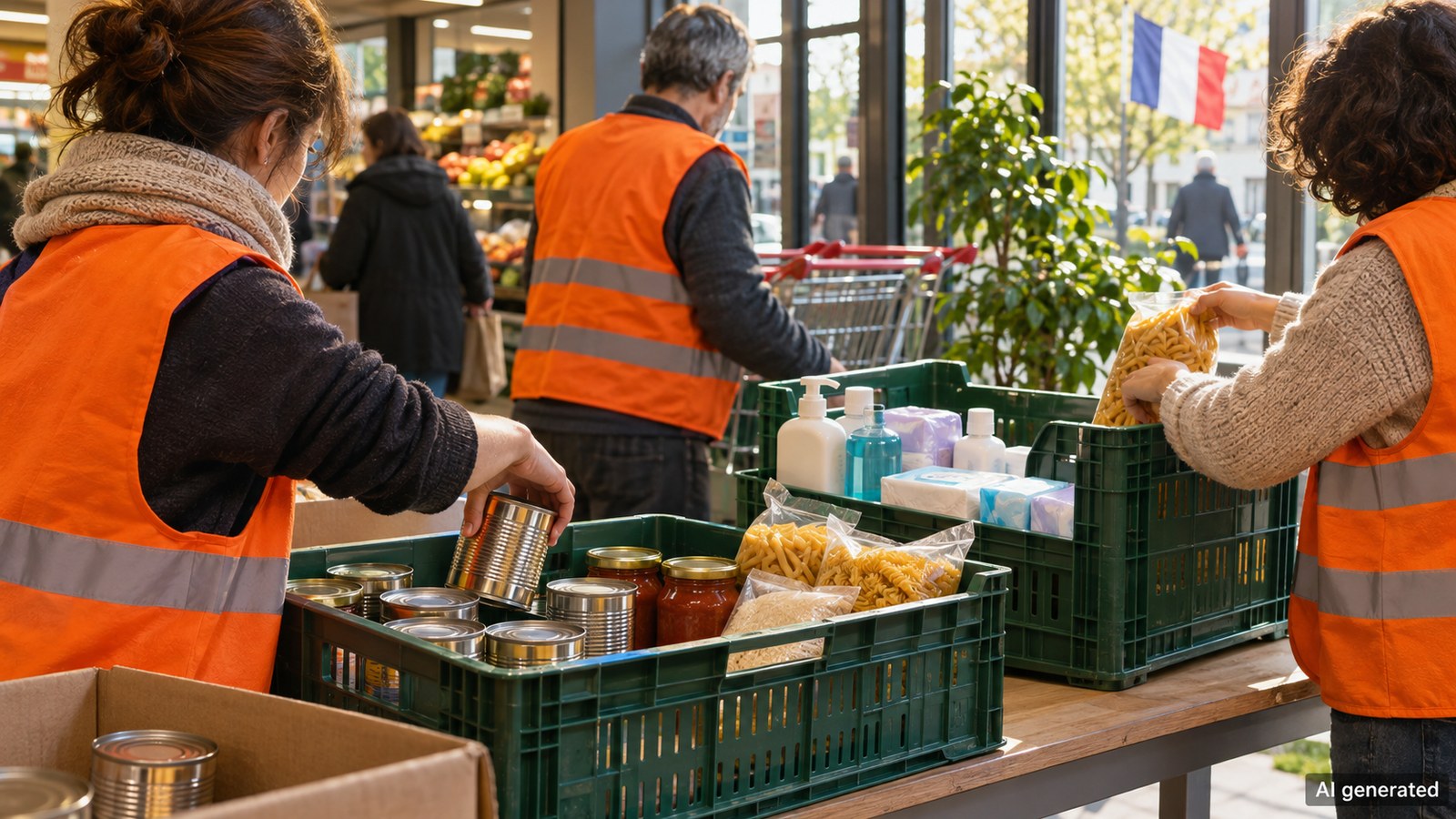
France's Food Banks are completing their 42nd national collection on Sunday 8 November after moving the annual drive three weeks earlier than usual. Volunteers have been receiving food and hygiene products in thousands of supermarkets, schools, town halls and workplaces since Friday. The federation says the three-day operation normally provides about 9 percent of its annual supplies.
The timing change is more than a calendar detail. AFP reported that organisers wanted to avoid an increasingly crowded end of November and begin restocking sooner for winter. The federation says its network now supports around 2.4 million people through more than 6,000 partner associations, social centres and solidarity groceries.
Big totals require careful wording
The national federation estimated that the 2025 collection brought in about 9,750 tonnes of products, equivalent to roughly 19 million meals. Its public material gives different approximate counts for this year's collection points, ranging from about 7,465 to nearly 9,000 depending on the page and definition. WHIF therefore uses 'thousands' rather than presenting one inconsistent figure as exact.
Demand has become more frequent as well as widespread. An industry partner involved in the launch said the annual number of people supported has risen from about 1.9 million in 2020 to 2.4 million, while repeat visits by the same households have increased. A Senate budget report independently recorded the rise in recourse to food aid and the pressure on public support.
The hidden cost of moving donations
Transport is another constraint. RTL reported on 8 November that the network's 550 trucks travel about five million kilometres a year and consume roughly 500,000 litres of diesel. Higher fuel costs therefore reduce the value of a donated product unless the logistics needed to collect, store and distribute it are also financed.
The system remains deliberately local: goods collected in a department are redistributed through nearby partner organisations. The federation also accepts financial donations online so local branches can buy products that are missing from physical collections. It asks especially for shelf-stable food, baby supplies and hygiene products rather than perishable items.
A weekend inside a longer crisis
The final day's outcome will not be known until products are counted and sorted. What is already clear is that the collection is no longer responding to a brief shock. With millions receiving support, repeated visits increasing and transport costs climbing, the weekend drive is a vital supply event inside a longer-term social challenge.
Sources & context
Reporting and reference material used for this article. Context sources do not independently confirm every news claim.
- Banques Alimentaires ↗Primary organiser information, published 3 November 2026: dates, requested products, share of annual supply and partner distribution network.
- AFP via Yahoo Finance France ↗Independent wire reporting, published 6 November 2026: 42nd collection, the earlier schedule and organiser explanation.
- RTL ↗Independent reporting, published 8 November 2026: fuel-cost pressure, truck fleet, annual distance and diesel consumption.
- French Senate ↗Primary parliamentary budget context: reported growth in food-aid demand and public financing for decentralised food assistance.
Written for WHIF from the linked material. This article does not claim on-the-ground reporting. Our editorial standards.