The Bayeux Tapestry visit now comes with a camera rule
The British Museum has restricted close-up photography to keep visitors moving. Wide views from the upper level remain possible.
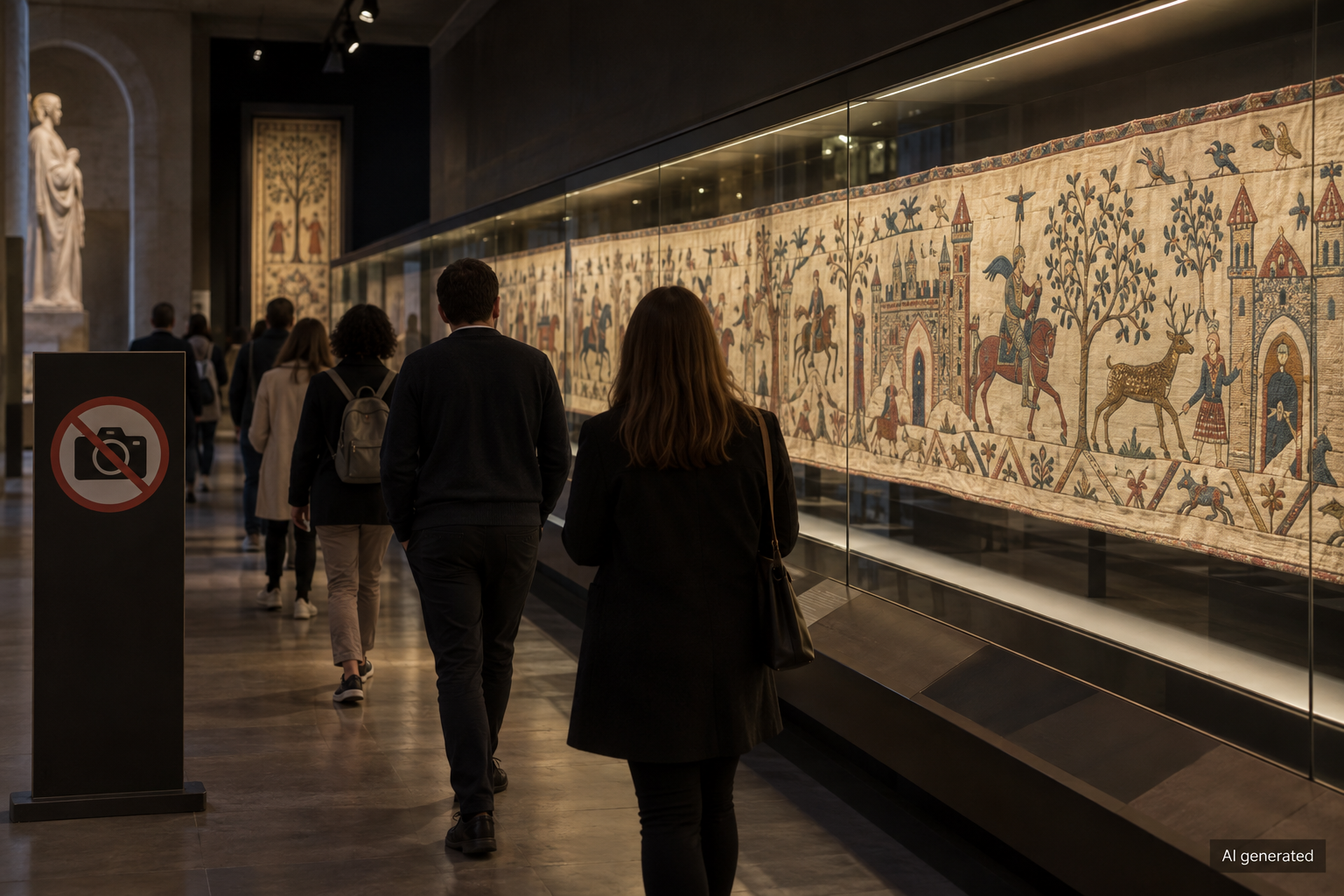
Visitors planning to see the Bayeux Tapestry at the British Museum should now expect restrictions on close-up photography. Time Out London reports that the museum changed its rule after the opening period, when phone use slowed movement along the 70-metre work and some later ticket holders experienced delays. Photography from the exhibition's upper level remains permitted, according to the same report.
A visitor-flow decision
The practical reason is capacity rather than a new claim about the effect of ordinary phone cameras on the textile. Visitors enter in timed intervals and move in one direction beside the display. The Times reported that groups were exceeding their 40-minute slots and that other visitors were turned away or did not complete the route before the protected display lighting was switched off.
The museum told Time Out that its priority was to give all visitors the best possible experience and that it was restricting photography while people move along the tapestry. It apologised to those who had waited longer than intended. That wording is narrower than a complete ban throughout the exhibition and makes the upper-level exception useful for anyone hoping to take a personal photograph.
The exhibition itself runs from September 2026 to July 2027, according to the British Museum's official page. The loan is the first time the nearly 1,000-year-old embroidery has returned to England. It depicts the events leading to the Norman Conquest and the Battle of Hastings, but the object is also a fragile textile whose light exposure and physical handling require specialist control.
The conservation story is separate
French and British conservators prepared the journey through testing and specially designed supports. The Guardian reported that the Bayeux Museum had once considered the work too fragile to move, then approved the loan after further assessment and transport rehearsals. The photography restriction is about the visitor experience inside the London display; it should not be confused with the separate conservation decisions that made the loan possible.
For a visit, the safest approach is simple: arrive for the booked slot, expect to keep moving beside the case and plan any photograph from the permitted upper viewpoint. The official exhibition page remains the authority for dates and ticket releases. Availability can change, and a news report about the rule is not a ticket confirmation.
The change also captures a familiar museum tension. A phone can help preserve a personal memory, yet repeated stops can reduce everyone else's time with a long, linear object. In this case, the institution has prioritised flow at close range while retaining a place for photography. The most useful preparation is to know that distinction before entering the gallery.
Sources & context
Reporting and reference material used for this article. Context sources do not independently confirm every news claim.
- Time Out London ↗Current reporting with the museum's explanation, visitor-flow details and the upper-level photography exception, published 21 September 2026
- The Times ↗Independent reporting on timed slots, delays and the operational reason for restricting photography, published 20 September 2026
- British Museum ↗Primary organiser material for exhibition dates, setting and historical description; consult live visitor information before travel
- The Guardian ↗Context reporting on the French conservation assessment, transport planning and conditions behind the loan, published 11 July 2025
Written for WHIF from the linked material. This article does not claim on-the-ground reporting. Our editorial standards.